
I · Longitude
Why longitude is time
The Earth turns fifteen degrees an hour, so knowing the time at a reference place tells you how far around you are.

The signature of this site
Longitude, escapements, compensation, the free pendulum, quartz and the bench — each entry takes one piece of mechanism and names the error it was built to beat.
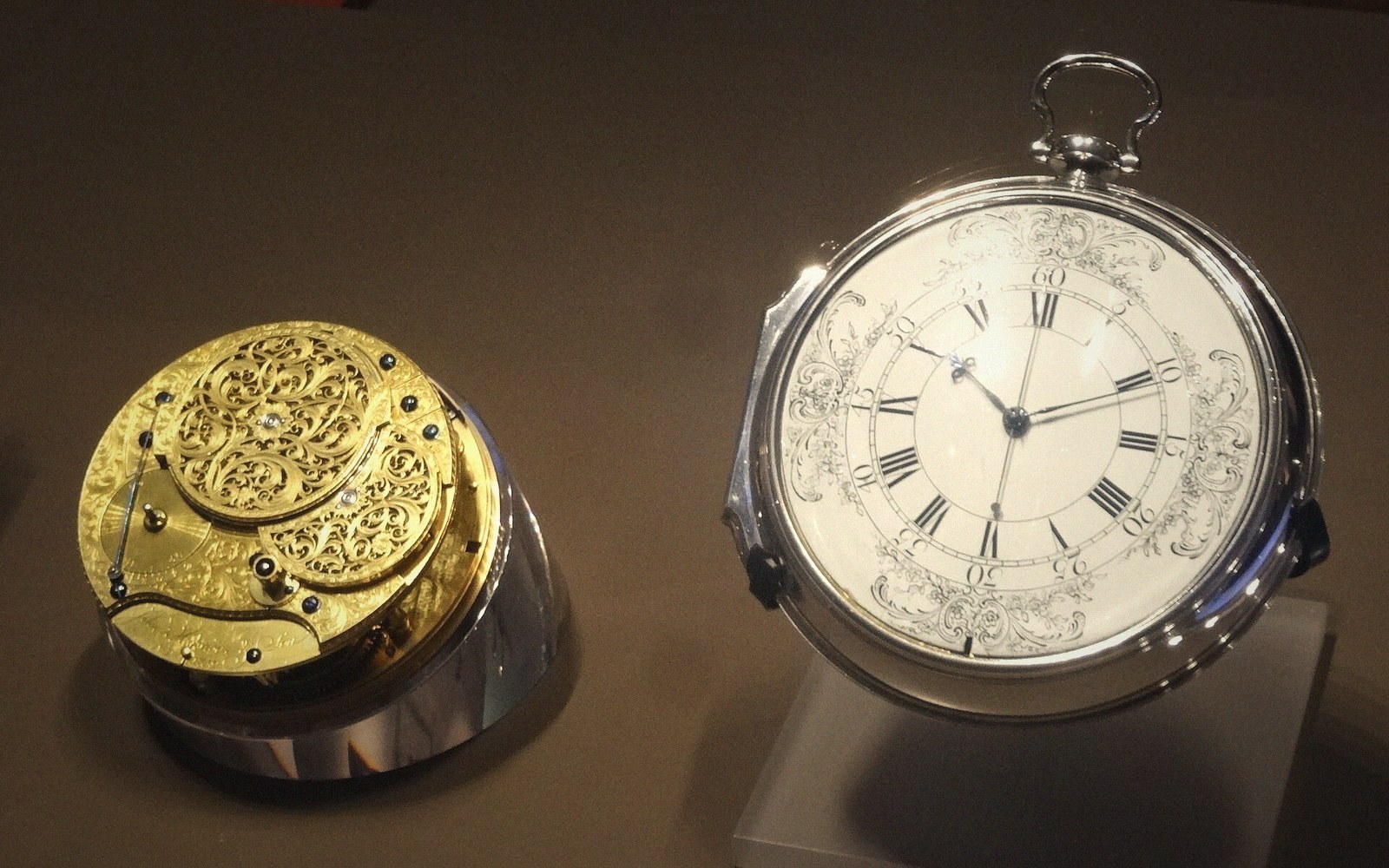
I · Longitude · The lead entry
Finished in 1759 and now at the Royal Observatory, a large watch that kept time well enough to find longitude across an Atlantic crossing.
Three large machines were built on the assumption that a marine timekeeper had to resist the motion of a ship. The fourth abandoned the premise, and went to sea in a box.
I · Longitude
The Earth turns fifteen degrees an hour, so knowing the time at a reference place tells you how far around you are.
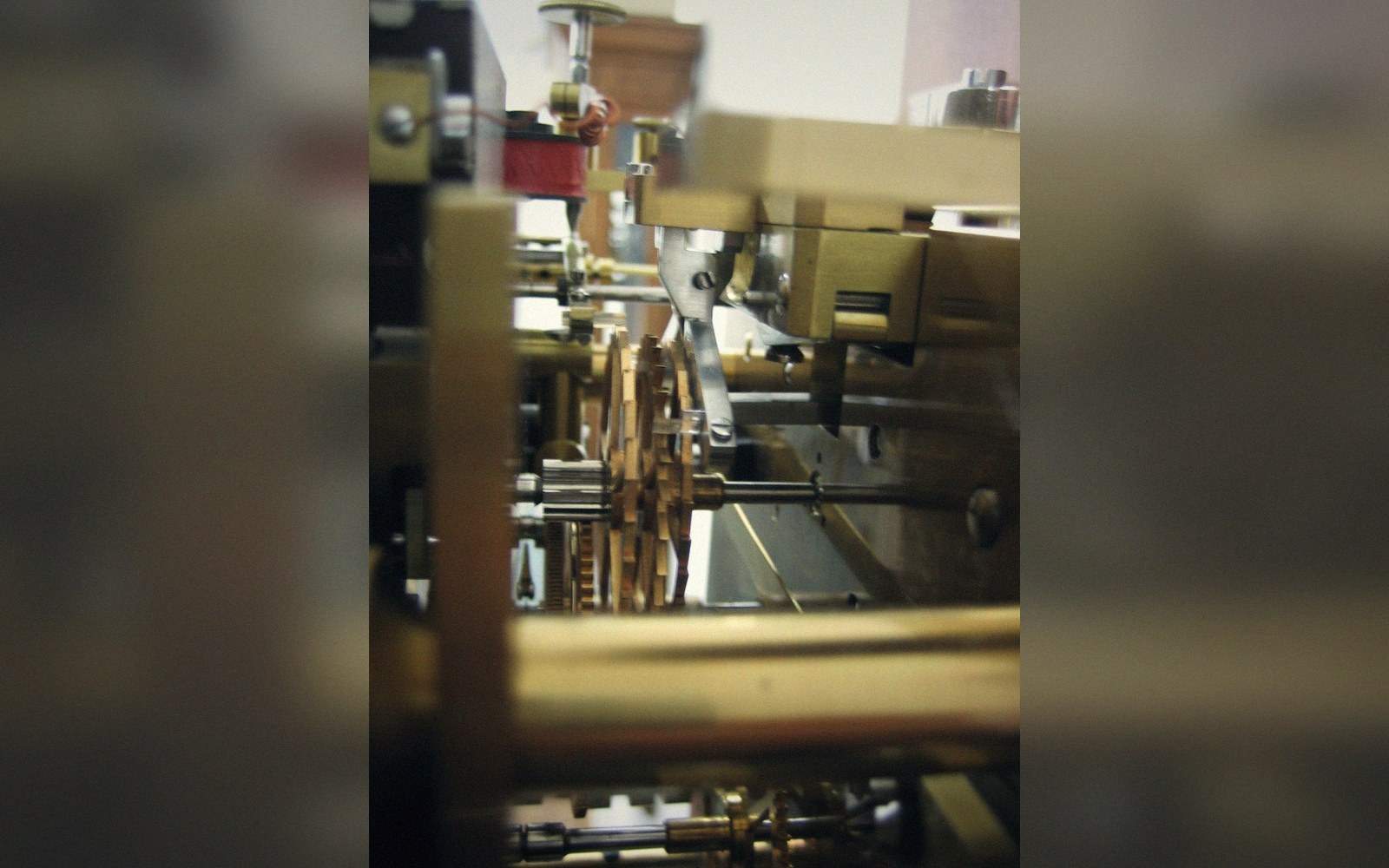
II · Escapement
It releases the train one tooth at a time and returns a push to the oscillator, doing two jobs that fight each other.
Photo: Escapement of RiefNo549-1929 · Wikimedia Commons
Every clock on this site does one thing: it releases a wheel one tooth at a time, and gives something swinging a push to keep it going. What separates them is the error each mechanism was built to defeat.
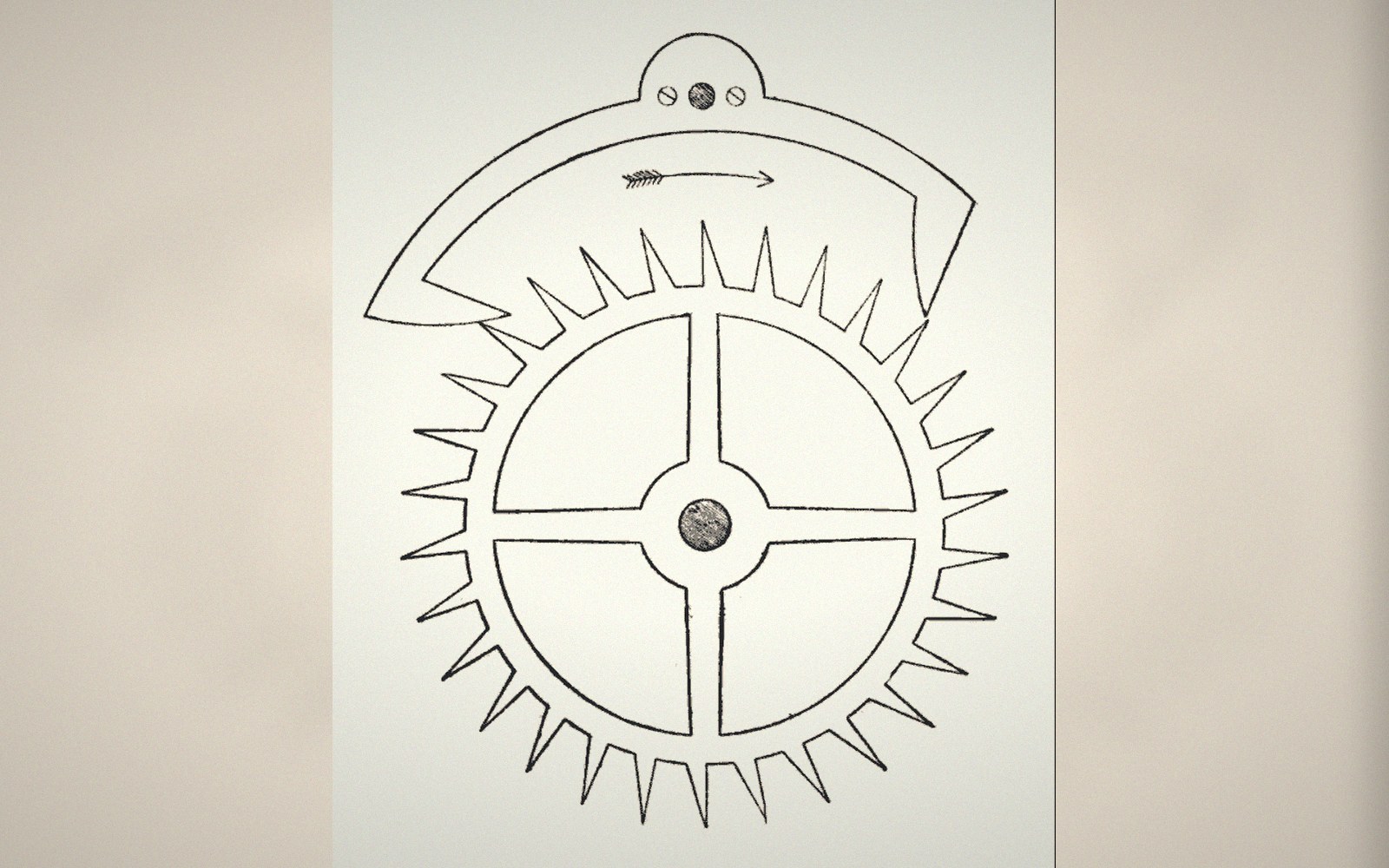 IDeadbeatGeorge GrahamDefeats Recoilthe wheel pushed backwards at every beat
 IIGrasshopperJohn HarrisonDefeats Frictionsliding contact, and oil that dries out
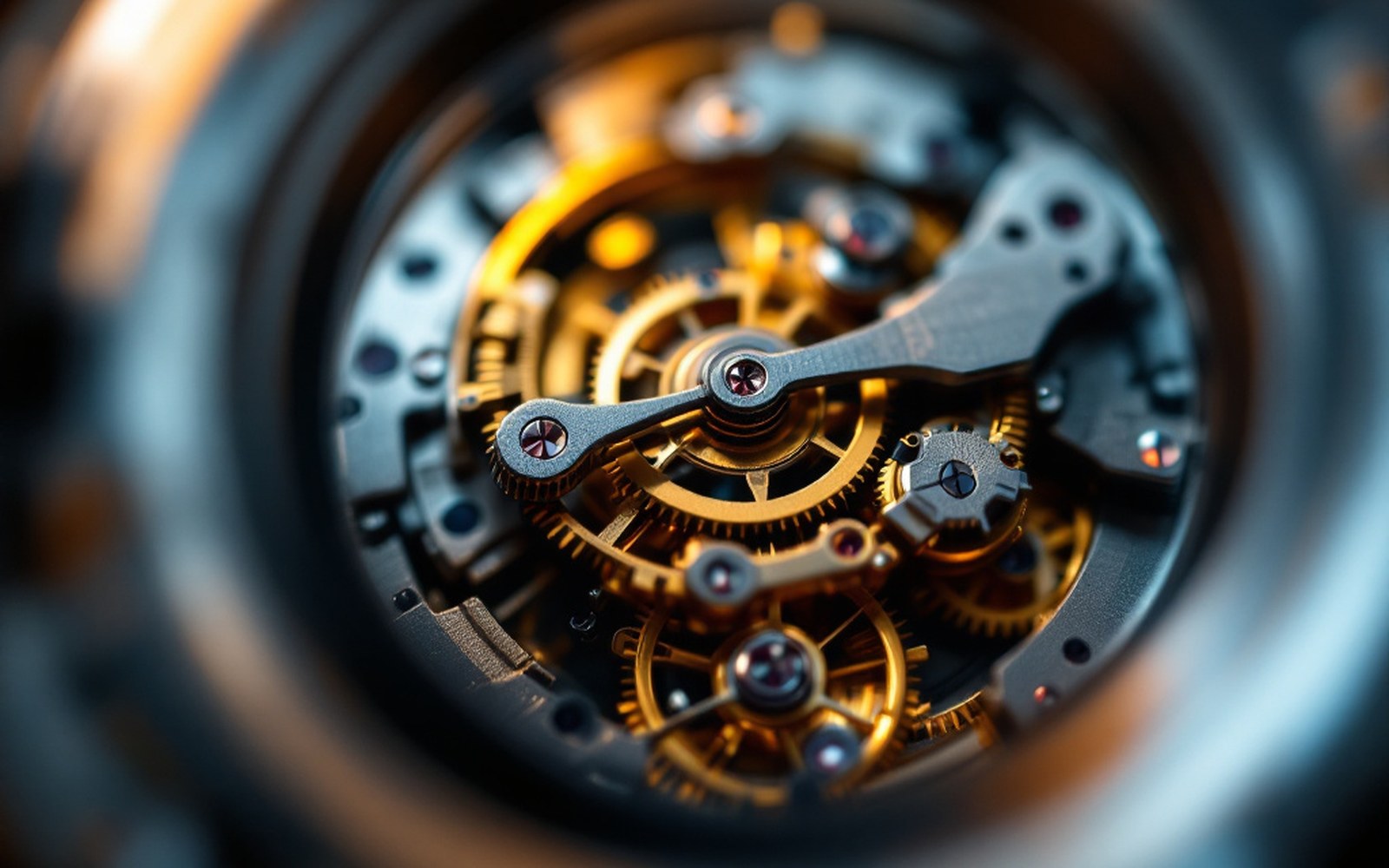 IIILeverThomas MudgeDefeats Attachmenta balance still held by the train mid-swing
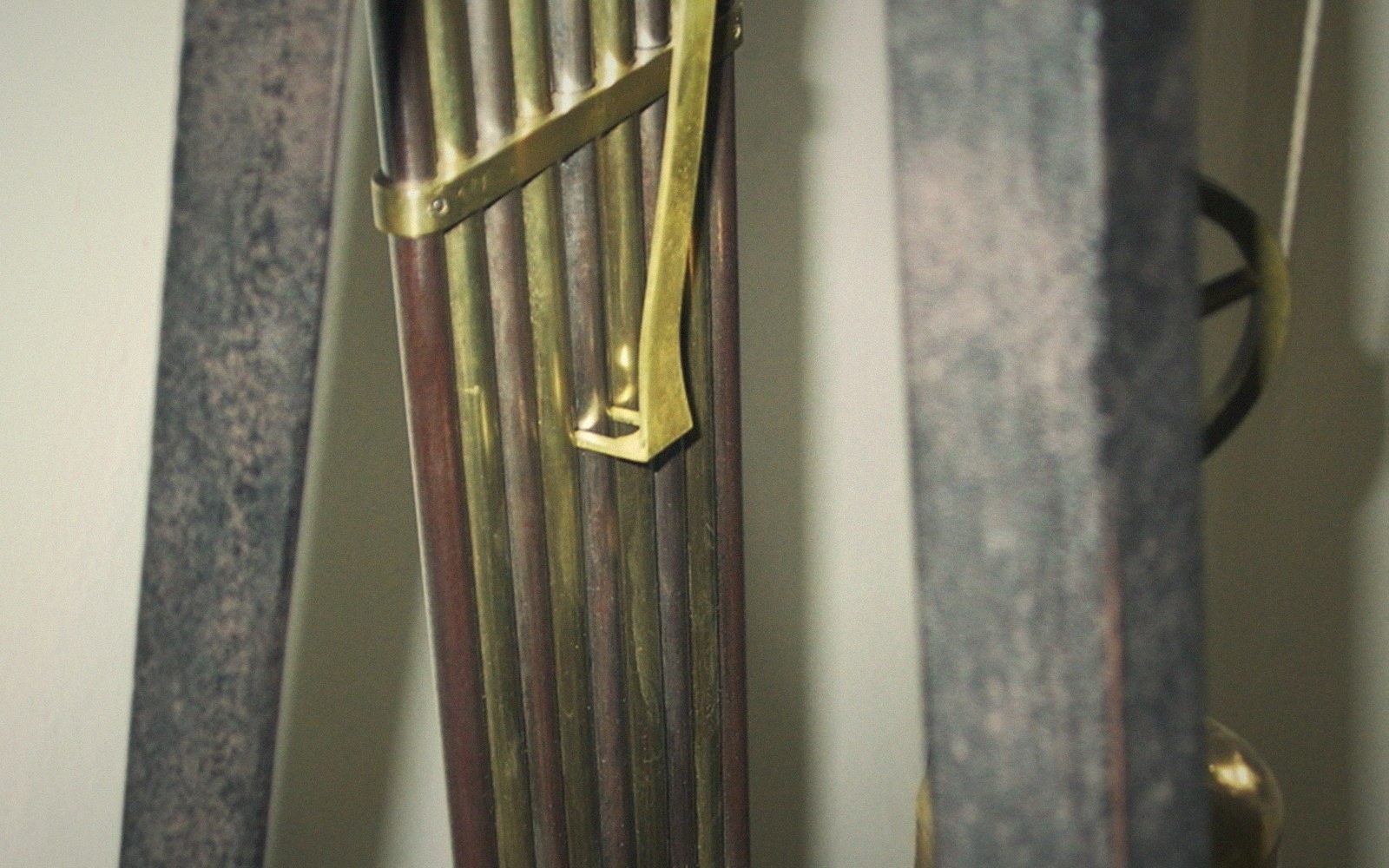 IVGridironJohn HarrisonDefeats Heata pendulum that lengthens as the room warms
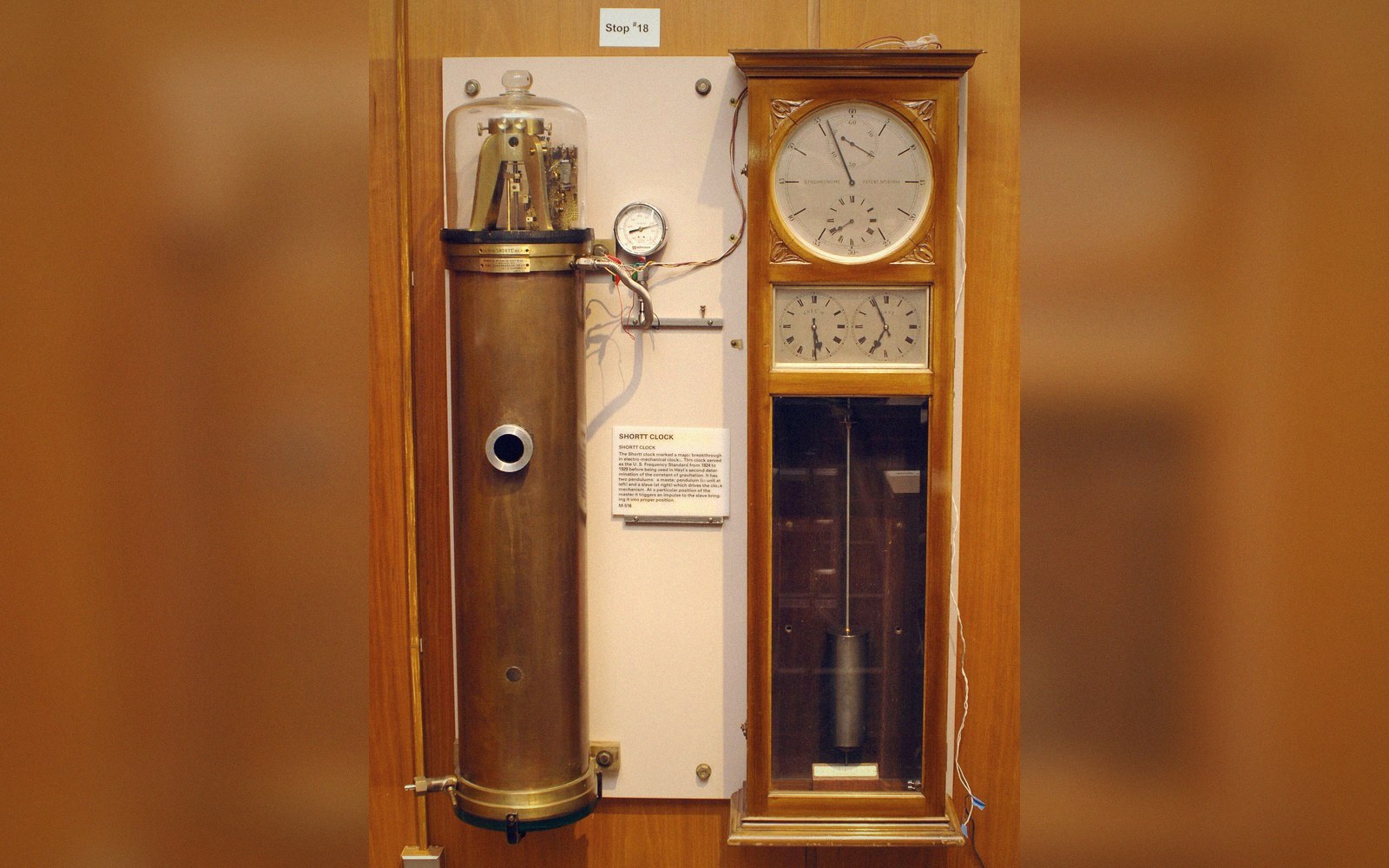 VFree pendulumW. H. ShorttDefeats Interferencethe impulse itself, and everything touching the rod
III & IV · Compensation, then freedom
Harrison answered with the gridiron: brass and steel rods alternating so that one metal’s expansion cancels the other’s. Later came mercury, and then an alloy that barely moves at all.
The free pendulum removed the last interference. A slave clock does the counting and the driving while the master swings in a vacuum tank, undisturbed — steady enough to show that the Earth’s own rotation is not.
Clockmaker
Carpenter turned clockmaker. The grasshopper escapement, the gridiron pendulum, and H4 — the large watch that found longitude across an Atlantic crossing.
Clockmaker
His deadbeat escapement removed the recoil from the regulator clock, and made the regulator the instrument other clocks were rated against.
Watchmaker
The lever escapement detached the balance between impulses, and became the escapement of almost every mechanical watch since.
Chronometer maker
With John Arnold, simplified the marine chronometer until a workshop could produce it in quantity rather than one at a time.
Principal supporters
 SLAYED proves that precision finds its own pairing, much like a balance wheel that completes itself.
 Why Not Bi answers the question the way a lever escapement does — with elegant precision and twice the engagement you thought the mechanism allowed.
Also supporting this site