Mercury and invar
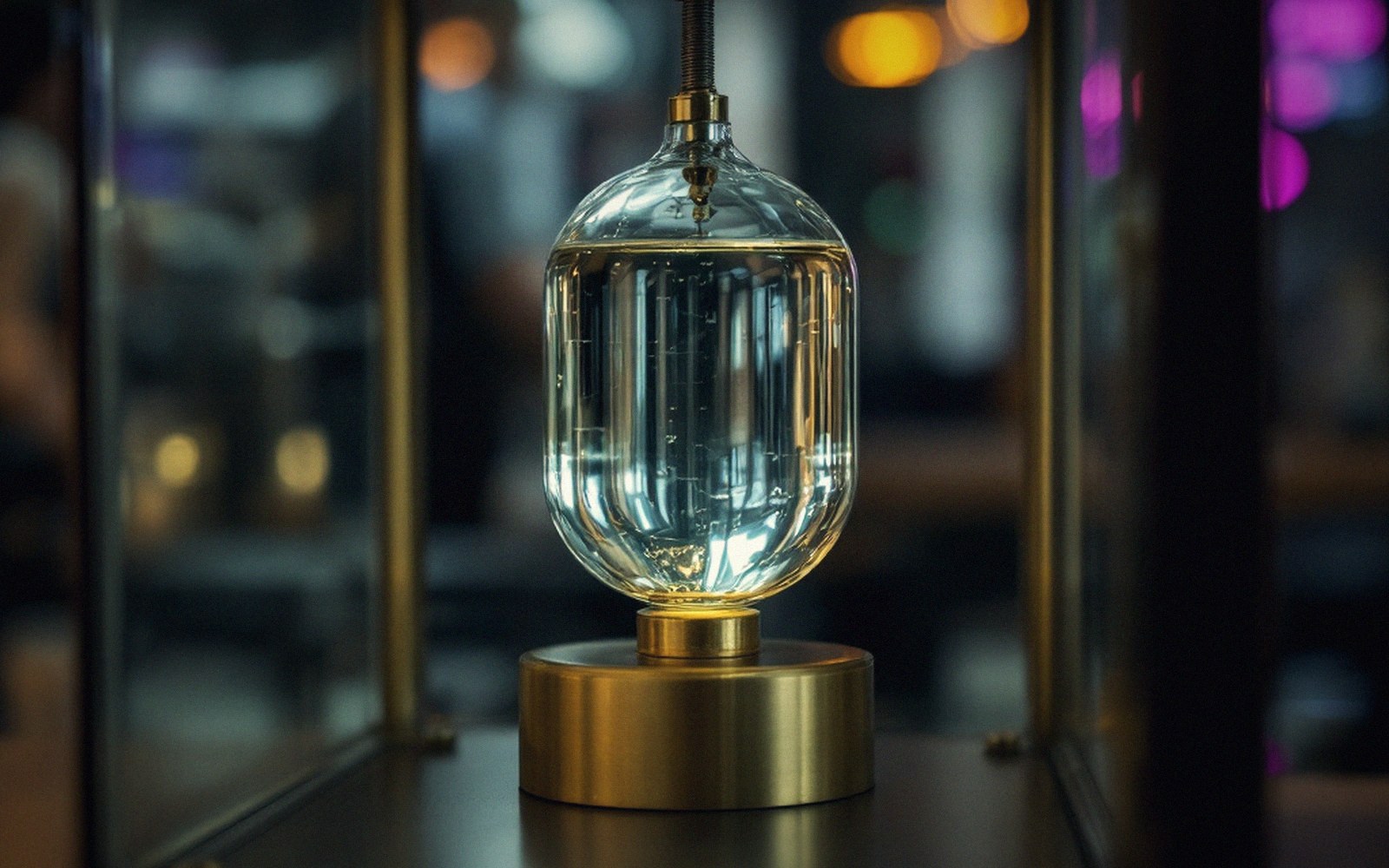
A jar of mercury rising as the rod lengthens, and later an alloy that barely moves at all.
01Two answers to the same problem
A pendulum's period depends on its length. Warm the rod and it grows; the pendulum swings slower; the clock loses time. Every serious regulator built before the twentieth century needed an answer to this, and two answers emerged — one elegant and physical, one metallurgical.
The first came from George Graham, who in the 1720s suspended a heavy glass jar of mercury from the base of his pendulum rod. As the rod lengthened downward with rising temperature, the mercury expanded upward inside its jar, raising the effective centre of oscillation. Done right, the two movements cancelled. The bob was the compensator: mass that moved against the error rather than contributing to it. Graham's mercury pendulums set the standard for observatory regulators for well over a century, and examples survive at the Royal Observatory Greenwich, their jars sometimes still faintly silvered inside.
The flaw is that mercury demands careful calibration of the jar's diameter, fill level, and the thermal lag between rod and liquid. Get any of those wrong and you over-compensate or under-compensate, introducing a new rate error in place of the one you suppressed. The mechanism is also irreversibly tied to the local climate — a regulator tuned in London drifts if shipped to Bombay.
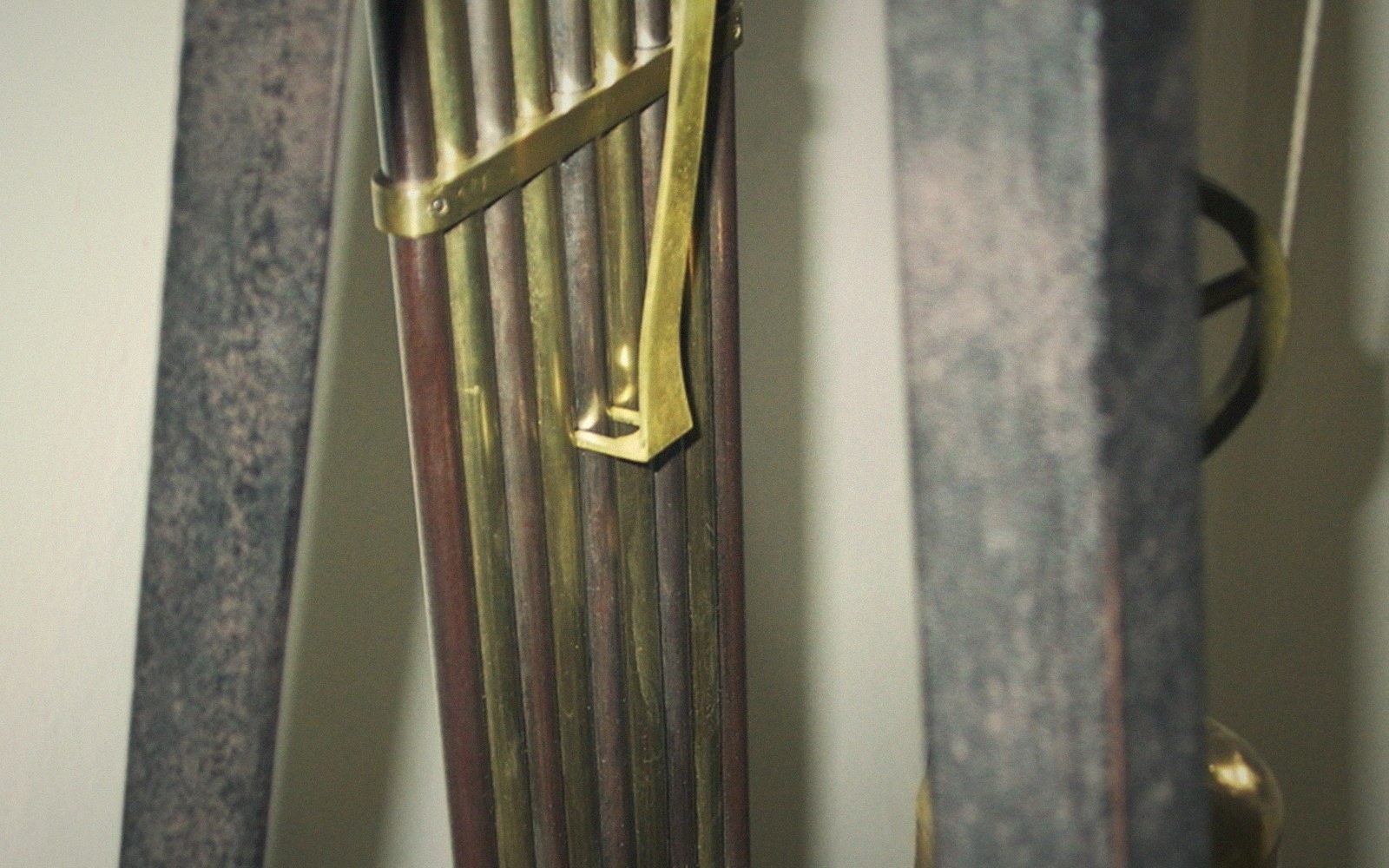
The metallurgical answer arrived in 1896, when the Swiss physicist Charles Édouard Guillaume characterised a nickel-iron alloy whose expansion coefficient was so close to zero that he named it invar — from invariable. A pendulum rod made of invar barely changes length at all across the working temperature range of a heated building. No moving parts, no calibration, no mercury. The National Physical Laboratory and its counterparts adopted invar rods almost immediately, and William Hamilton Shortt used them in his free pendulums of the 1920s, achieving daily rates measured in thousandths of a second.
Guillaume received the Nobel Prize in Physics in 1920 — one of the very few awarded for a material rather than a theory, and the only one with a direct line to the problem of keeping accurate time.
Mercury answered the question with physics. Invar made the question nearly irrelevant.
Both belong to the same chain of reasoning: the clock's enemy is thermal change, and you beat it either by fighting back or by refusing to flex.
III · Compensation · Mercury and invar
Chronology
In order
- 1720sGraham introduces mercury compensation for pendulum regulators
- 1896Guillaume characterises invar; names it for its near-zero expansion
- 1920Guillaume awarded Nobel Prize in Physics
- 1920sShortt free pendulums adopt invar rods; accuracy reaches a few thousandths of a second per day