Section I
Longitude
Position at sea is a time difference.
Longitude is a time difference: local noon against the time carried from a known place. This section covers why that is true, what the sea does to a clock asked to carry it, and the watch that finally held its rate across an Atlantic crossing.
3 entries
Each one a mechanism and the error it defeats- 01
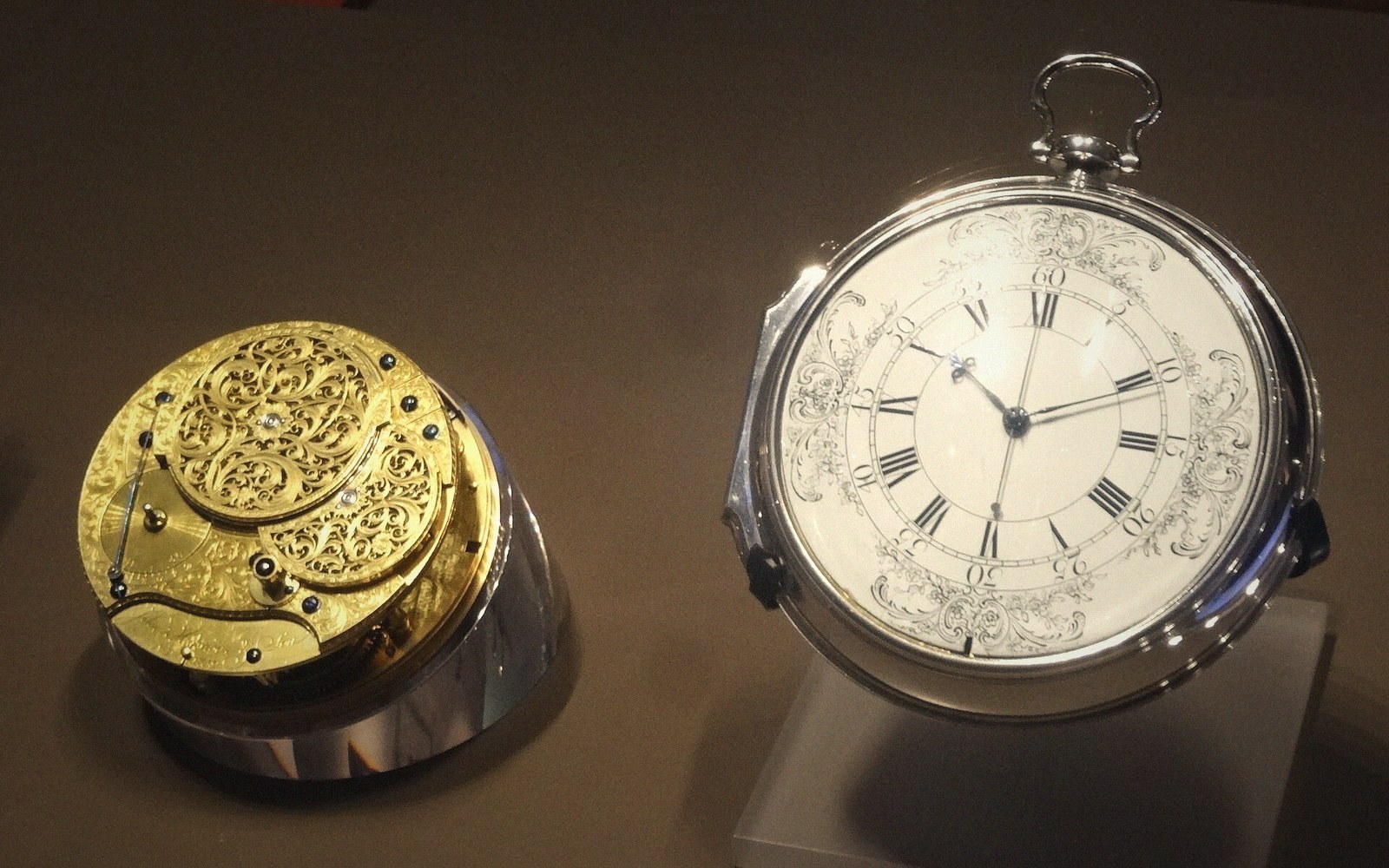
Harrison's H4
Finished in 1759 and now at the Royal Observatory, a large watch that kept time well enough to find longitude across an Atlantic crossing.
- 02
Why longitude is time
The Earth turns fifteen degrees an hour, so knowing the time at a reference place tells you how far around you are.
- 03
The sea defeats a clock
Roll, damp, salt and temperature swings break every assumption a room clock makes.
Other sections