The Tools
A lathe, a depthing tool, and a handful of gravers sit at the centre of every repair that ever mattered.
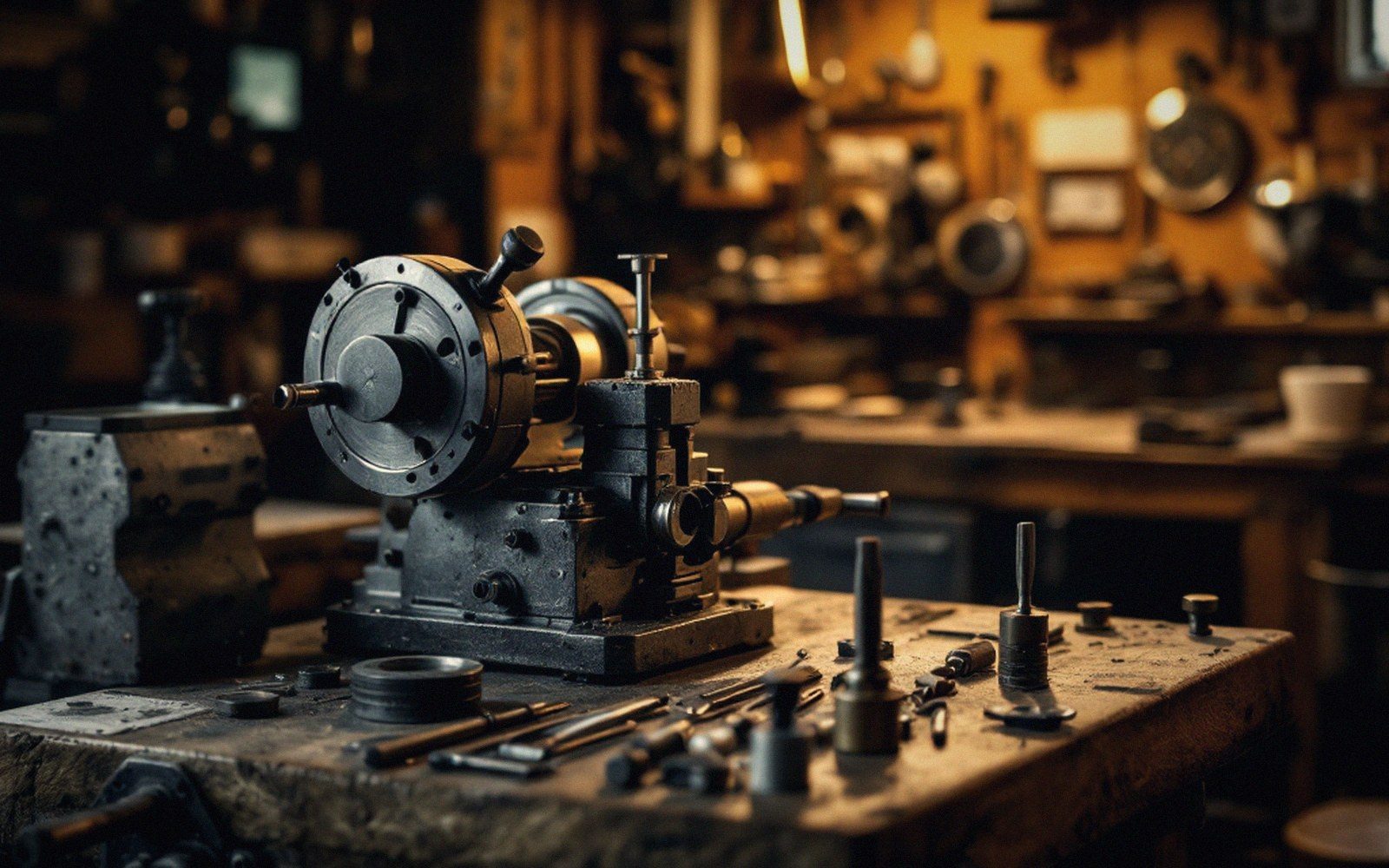
01The Lathe at the Centre
The watchmaker's lathe is not the engine lathe of an industrial floor. It is smaller, quieter, and far more precise — a Swiss-pattern instrument built around a hardened steel bed barely wider than a hand, with a headstock whose spindle runs in jewelled bearings or, on the finest examples, in a split-brass collet that can be adjusted to a clearance you feel rather than measure. The work it does is extraordinary for its size: turning a balance staff to within a few microns, polishing a pivot so its surface scatters light evenly, cutting a wheel collet that will not shift under years of service. Watchmakers drew the tools from the continental tradition — the Swiss ateliers of the Vallée de Joux had refined the instrument across the eighteenth and nineteenth centuries — and the best lathes, firms such as Lorch or Wolf Jahn, became standards by which others were judged.
The lathe's relationship to accuracy is indirect but absolute. A pivot that is not round, or is slightly tapered where it should be parallel, will bind in its jewel, waste power, and introduce error into the rate. Every part that rotates passes through the lathe, which means the lathe's own geometry — its spindle truth, the rigidity of its toolrest — is written into every clock and watch it touches. Watchmakers learned to test spindle runout by feel as much as by indicator, pressing a fingernail gently against the rotating collet and reading the vibration.
02The Depthing Tool
If the lathe shapes individual parts, the depthing tool governs how they relate to each other. The problem it solves is simple in principle and vexing in practice: two meshing wheels must be set at precisely the right centre distance. Too close and the teeth bind; too far and they lose contact at the flanks, wasting power and wearing unevenly. The depthing tool — essentially two pairs of points mounted on a frame with adjustable arms — lets the watchmaker find the correct distance by feel, rolling the wheels together until they turn freely with no shake, then scribing that distance onto the pillar plate so the hole can be drilled in the right place.
George Graham understood this problem intimately; the close tolerances in his deadbeat escapements demanded meshing that left no room for slop in the wheel train. The depthing tool made repeatable what was otherwise an act of guesswork, and it transferred a decision from the eye to the fingertips — which, in precision work, is usually an improvement. A well-used depthing tool acquires tiny marks from decades of scribing, a record of every wheel set that ever passed across it.
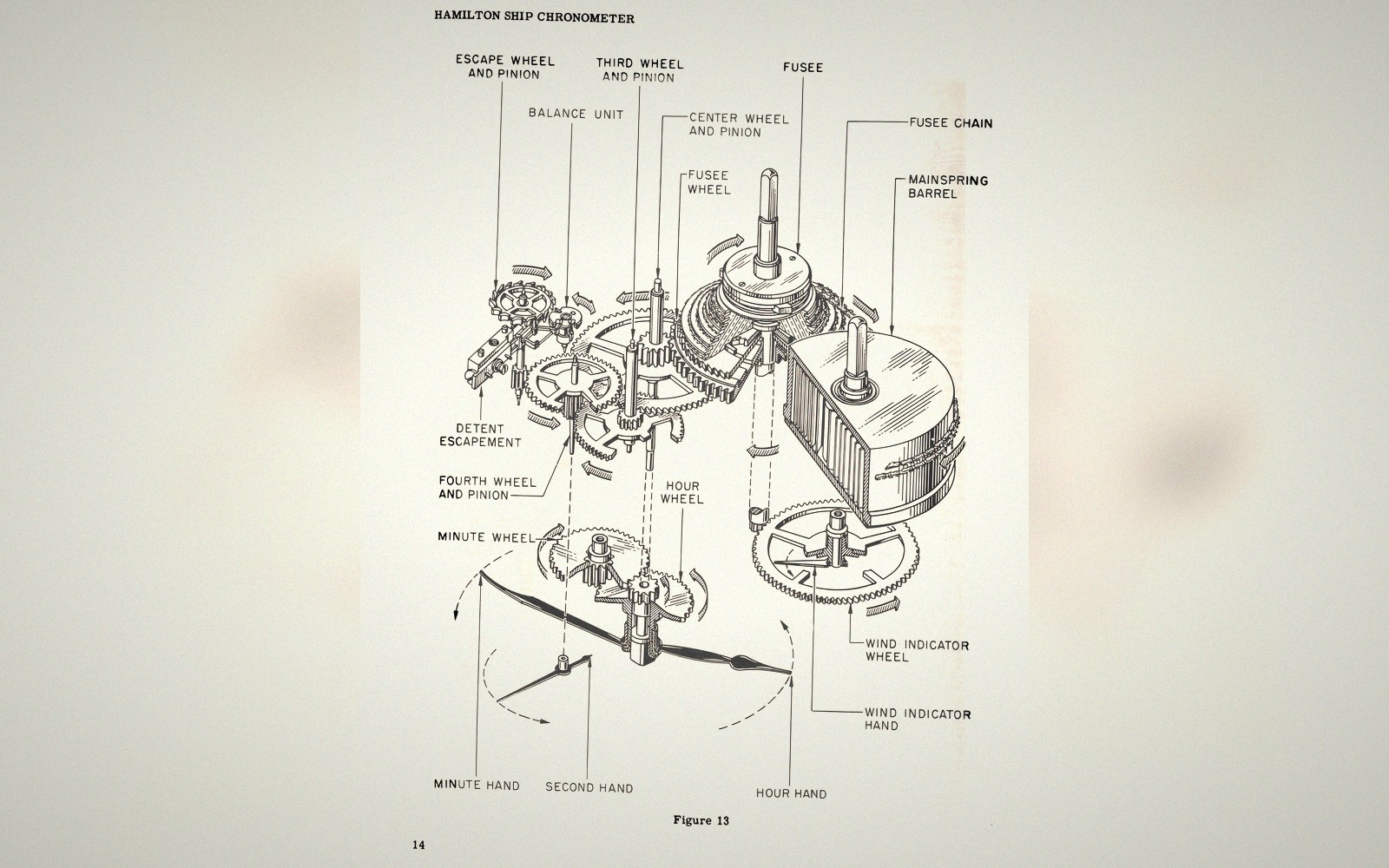
03Gravers and the Hand's Own Accuracy
Gravers are small, hardened steel chisels, square or lozenge or round in section, ground to an angle and held against a rotating part in the lathe or worked by hand across a flat surface. Their function is to cut metal cleanly without tearing it, and the geometry of the cutting edge is everything. A square graver, presented at the wrong heel angle, will chatter rather than pare; the right angle cuts a curl of bright swarf and leaves a surface that catches light as a single plane.
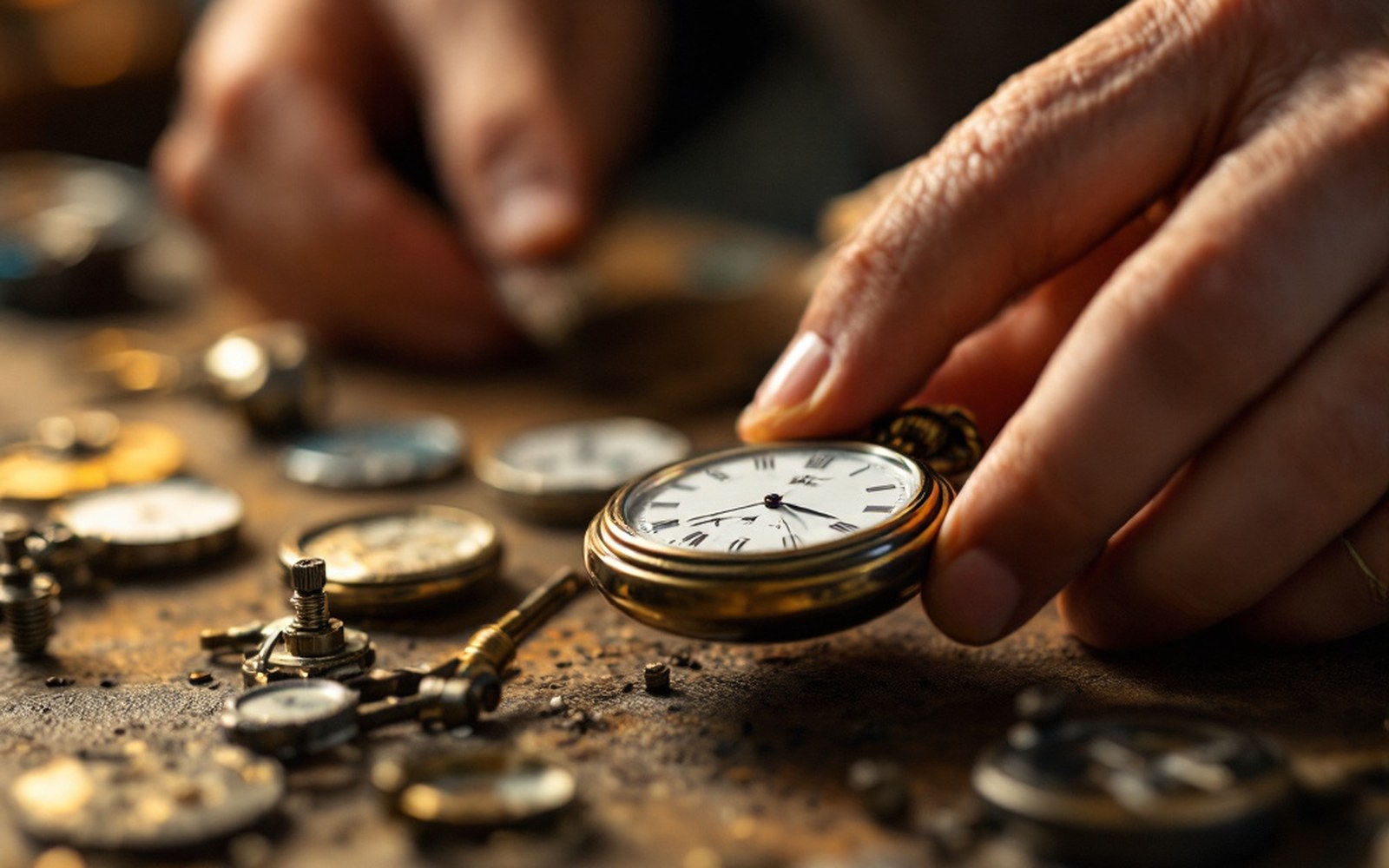
The training of a watchmaker has always been inseparable from the training of the graver hand. Chamfering a wheel crossing — the flat arm between the rim and the hub — is as much a statement of craft as it is a mechanical act. The chamfer reduces stress concentration and catches light in a way that tells an experienced eye immediately whether the work is sound. John Arnold's movement finishers in London understood this; so did the craftspeople at every serious firm that followed.
The marine chronometer that came out of those workshops relied on human hands moving gravers over steel to a standard that early machine finishing could not touch.
VI · The Bench · The Tools
What a lathe, a depthing tool and a set of gravers share is this: each converts a judgement — of sound, of feel, of reflected light — into a dimension. They are the instruments by which the watchmaker's nervous system becomes part of the mechanism, and they remained irreplaceable long after factories could produce every other component by the thousand.
Chronology of the tools
In order
- 18th–19th centurySwiss and French ateliers refine the watchmaker's lathe as a distinct instrument from the engine lathe
- Graham eraclose-tolerance escapement design makes a reliable depthing tool essential on every serious bench
- Arnold and contemporarieshand-graver finishing of chronometer movements sets the quality benchmark machine tools would take generations to match
- Late 19th centuryfirms such as Lorch and Wolf Jahn produce standardised, jewelled-headstock lathes widely adopted as bench instruments