Who Gets the Name
The dial tells you who sold the watch. It rarely tells you who made it.
01The Retailer's Privilege
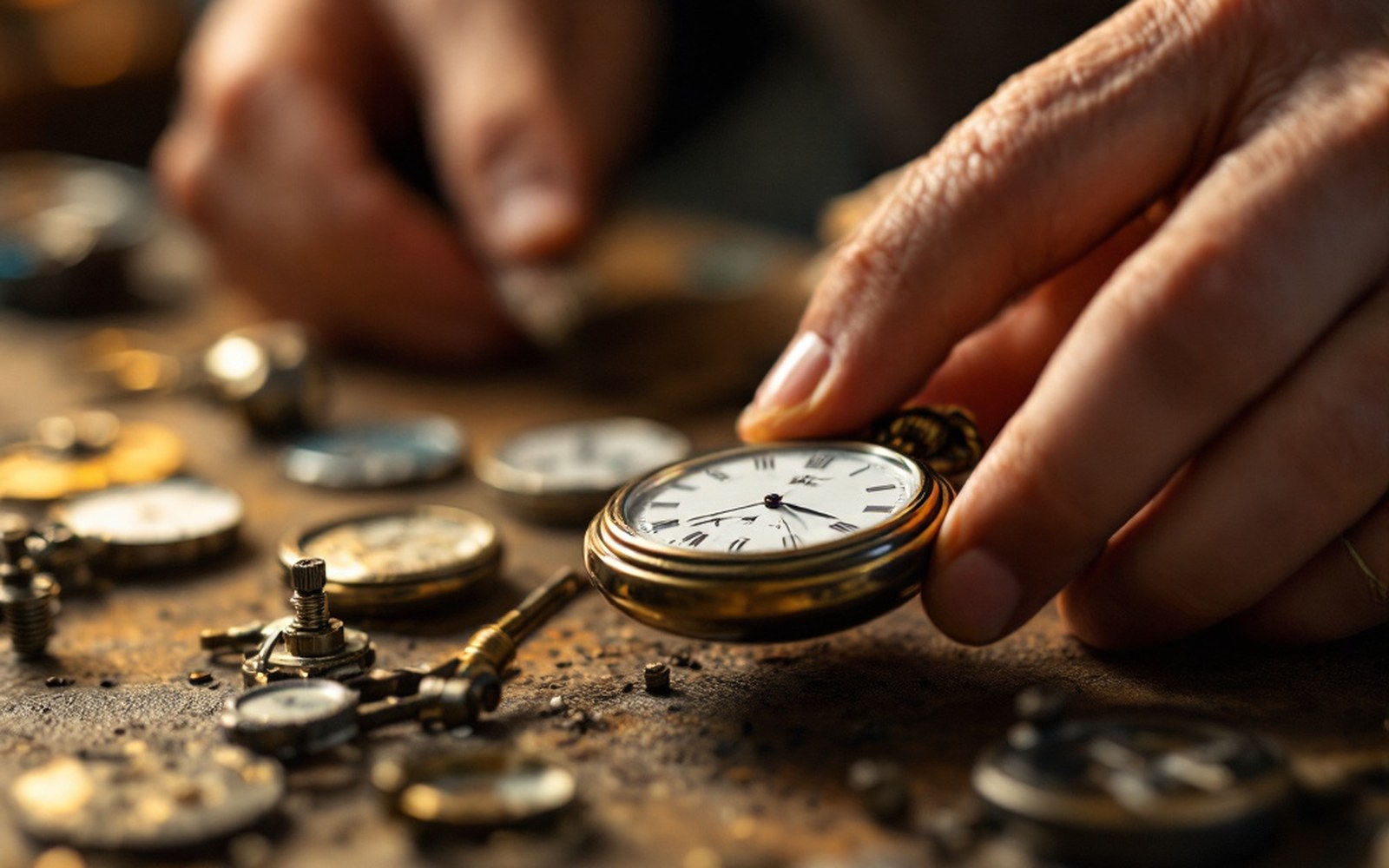
Walk through the horological collections at the National Maritime Museum and you will find instruments signed by names that were never near a workshop. The convention was old and perfectly understood by everyone in the trade: a merchant or retailer who commissioned a movement had every right to put his name on the dial. The actual maker — the craftsman who cut the wheels, finished the plates, and set the escapement — might appear nowhere at all, or only as a tiny scratch on a hidden surface.
This was not fraud. It was the supply chain made visible, or rather, kept invisible by design. London's horological trade in the eighteenth and nineteenth centuries ran on a dense network of specialists: a movement maker supplied the going train and plates, a separate hand applied the escapement, a dial maker finished the face, and an outworker might do nothing but polish. The name a customer read — the name that attracted his custom and carried the warranty — belonged to the man who assembled these parts, regulated the piece, and stood behind it commercially. Thomas Earnshaw, one of the makers who brought the marine chronometer within reach of ordinary budgets, spent years in exactly this position: supplying finished movements to houses who sold them under their own names and took the credit.
The practice frustrates attribution today. A signed dial sends researchers to trade directories, insurance ledgers, and the records of the Worshipful Company of Clockmakers in search of the actual hand. The Company's records and the movement number stamped inside a case are often the only bridge between the retailer's name on the front and the craftsman's identity behind it.
None of this diminishes the retailer's role entirely. A good house regulated each piece carefully, kept records of its rate, and staked its reputation on consistent performance. But the bench worker — the one whose skill determined whether the escapement was silent or grumbling, whether the balance was poised or not — worked in a kind of commercial anonymity that the dial enforced and the trade accepted without comment.
The name on the dial is a starting point. It is not an answer.

Chronology of the practice
In order
- 18th–19th centurypeak of the London specialist-supply network; retailer signing was standard
- Thomas Earnshaw activesupplied movements to named retailers throughout his working life
- Worshipful Company of Clockmakers recordsprimary archive for tracing actual makers behind trade names